
Knowing When to Sell: A Strategic Framework for Timing an Exit
For most business owners, deciding whether to sell is inseparable from deciding when to sell. Wait too long, and you…
This is a guest post from Max Friar, Founder and Managing Partner of Calder Capital, an Axial member since 2015 and an Axial sell-side partner since March 2025. The Calder team has represented 338 total deals on the Axial platform and has been recognized as an Axial Top 25 Lower Middle Market Business Broker continuously since 2024.
Earlier this year, I presented a business owner with a detailed valuation of his company. The business generated roughly $1.2 million of EBITDA, and our conclusion – backed by my six transparent data points and our experience – was that likely offers would fall somewhere around $4.5 million to $5.4 million.
The next day, he emailed me to say he had consulted an “expert” who believed we had dramatically undervalued the company. According to this expert, the business should command at least a 7x multiple and, if positioned correctly, might achieve 9x.
The expert was AI, as evidenced by the prompt that he had failed to omit from the email.
I have spent more than 20 years in lower middle market M&A, including 13 years as the founder of Calder Capital. This was the first time a seller had so plainly used AI to rebut a valuation. It was not the last.
Axial’s latest member survey is timely evidence of the underlying problem. 57% of respondents identified valuation expectations as the single biggest reason deals failed in the first half of 2026, more than double the 28% reported for failed deals in 2025. Yet the same survey was not particularly bearish: 87% expect lower middle market activity to remain steady or increase, and 91% expect buyer competition to hold steady or increase.
That combination is interesting. Buyers and capital can be present while deals still fail because the parties cannot agree on value.
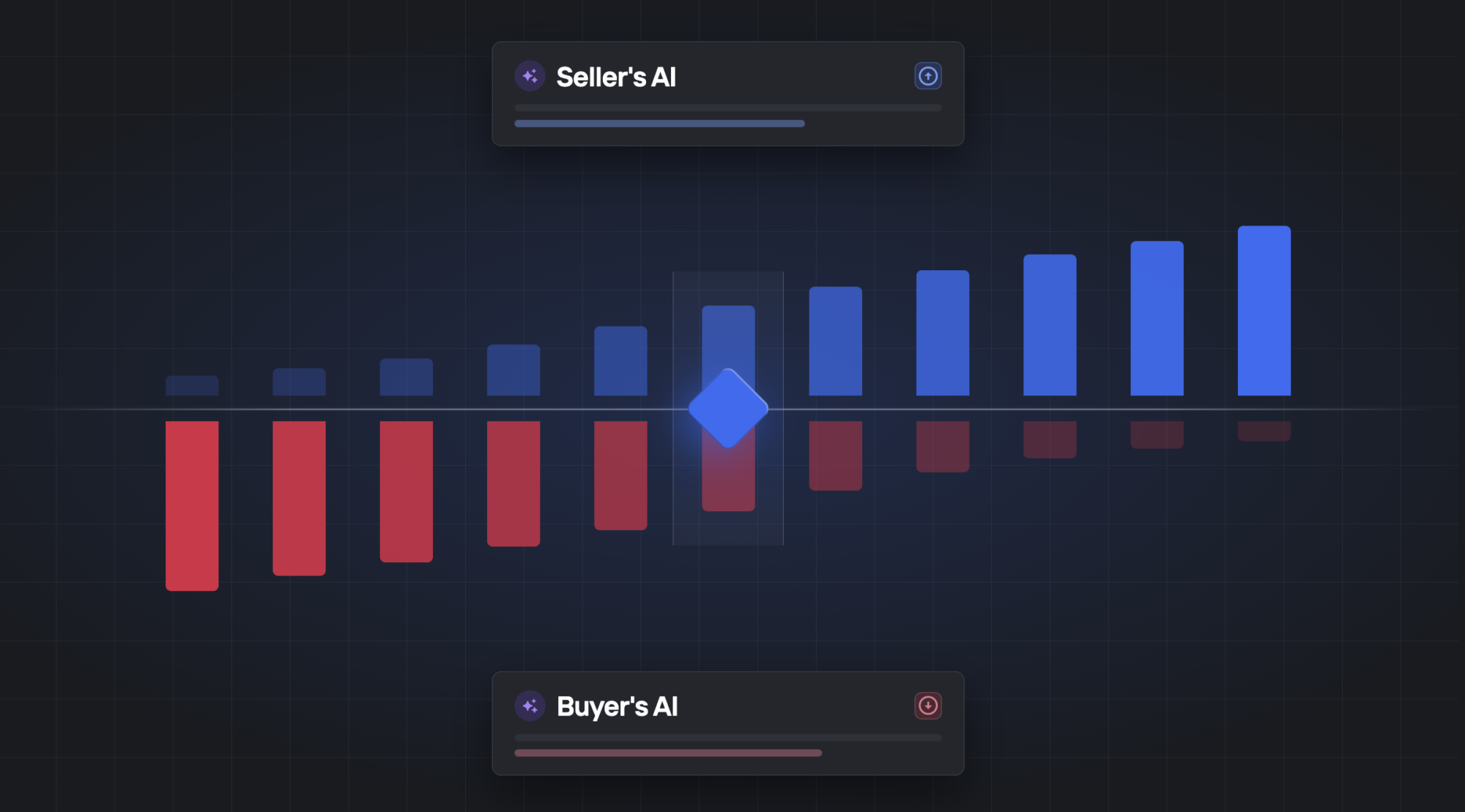
AI is exceptionally good at building a case around a premise. Ask, “Why is my business worth $8 million?” and it may produce a polished case for $8 million. It may cite growth, recurring revenue, strategic buyers, industry premiums, replacement cost, and future opportunity. The answer can sound independent and authoritative, even though the question already pointed it toward the desired conclusion. Even if it tells you that your business is likely not worth $8 million, just keep prompting!
The buyer can do the same thing from the opposite direction: “Why is this business overpriced?” The lender can ask which add-backs should be rejected, what could impair debt service, and which risks require more equity or seller financing. Each party receives a confident answer supporting the position it was already inclined to take.
The risk is not simply that the analysis may be wrong. It is that AI can increase someone’s conviction in a valuation without adding any new market evidence.
I recently raised this question on LinkedIn and received some solid feedback. Sam McQuade of Panterra Finance put it well: “AI marks to prompt, not to market.” His broader point was that the owner may not have received a better valuation. He received a better-argued valuation.
That is not a seller-only problem. Buyers can use AI to rationalize a low offer just as easily as owners can use it to rationalize a premium. Founders are naturally attached to what they built. Buyers are naturally concerned about overpaying. Lenders are paid to focus on downside. AI can turn each party’s normal bias into a clean, persuasive memorandum in seconds.
I am not arguing against using AI in a transaction. Owners can use it to understand valuation terminology, compare offer structures, organize diligence, identify missing information, and anticipate buyer questions. Buyers can use it to analyze scenarios and test assumptions. Advisors should use it too.
AI does not fund an acquisition, obtain investment committee approval, survive quality of earnings, negotiate a purchase agreement, or show up at closing with the money. A theoretical strategic buyer capable of paying more is not the same as an identified, motivated, and financeable buyer willing to do so.
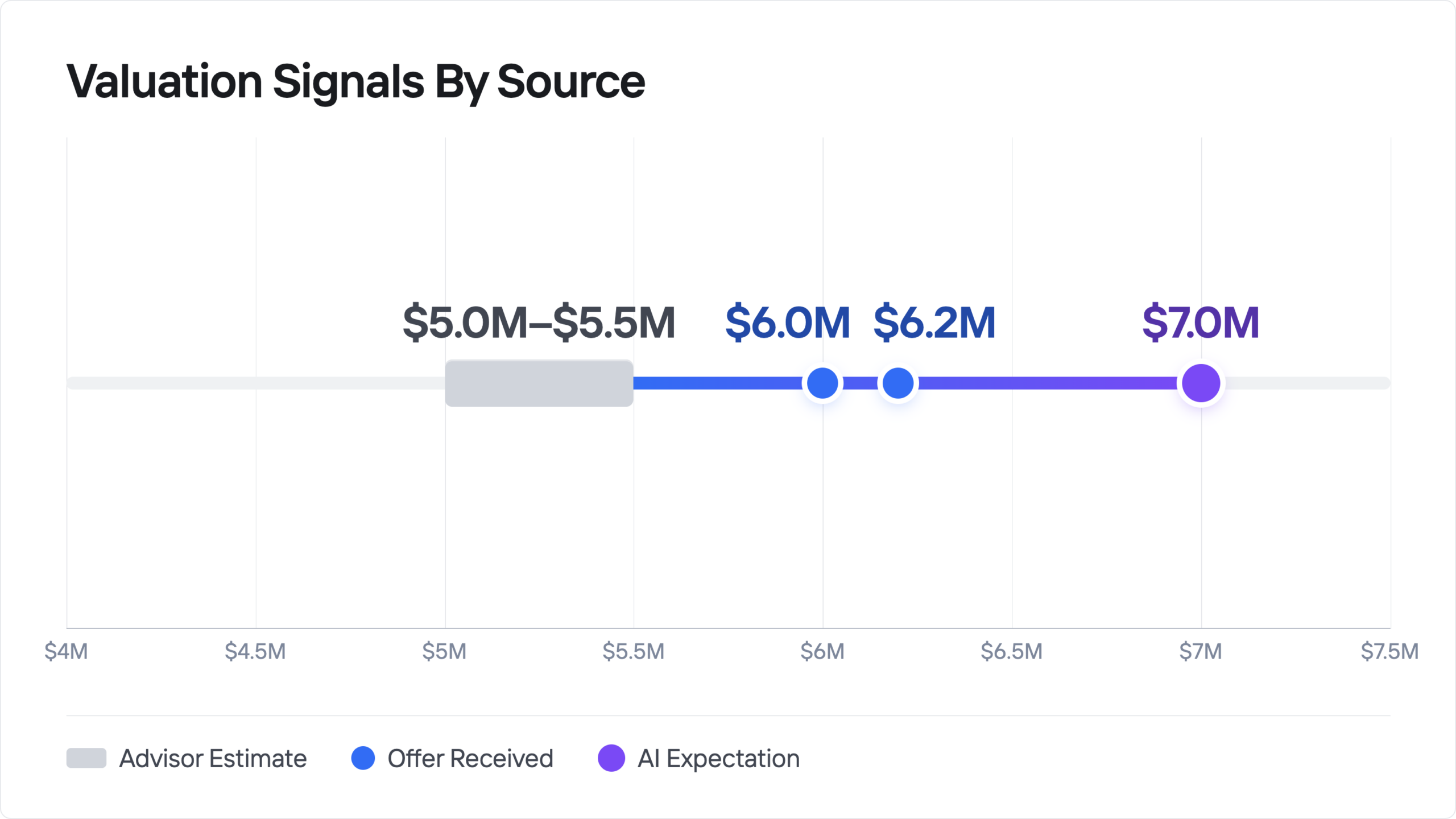
One of our clients recently received multiple offers, including two at $6.0 million and $6.2 million, both above our original valuation range of $5-5.5 million. Instead of being pleased, the owner remained anchored to an AI-generated expectation of $7 million.
Steve Simon of DQM Advisory made another practical observation: owners tend to give AI the good parts of the story, but not always the issues buyers will emphasize to drive value down. Buyers often make the reverse mistake. AI is then asked to reach a conclusion from an incomplete record and delivers that conclusion with confidence.
Responsible AI use in a negotiation requires making the tool argue against you.
A seller who believes the company deserves a premium should ask: “Write the strongest reasonable buyer and lender case against this valuation. What evidence would disprove my position? What facts would an actual buyer need before paying more?”
A buyer convinced a company is overpriced should ask: “Write the strongest seller case for a premium. What strategic value, competitive pressure, or opportunity cost might I be discounting? What evidence would justify a higher offer?”
Both sides should ask AI to identify missing facts, cite its sources, distinguish enterprise value from equity value and cash at close, and separate guaranteed consideration from earnouts, notes, and rollover equity.
This is also where advisors must lead. We cannot roll our eyes when a client brings us an AI analysis or simply tell them the machine is wrong. We should assume that buyers and sellers are uploading valuations, LOIs, emails, and diligence materials and asking AI what they mean. The advisor’s job is to review the output, expose the assumptions, trace the sources, ask what was omitted, and make the model sit in the opposite chair.
Then we must bring everyone back to the evidence that matters: current buyer feedback, lender appetite, actual offers received, deal structure, diligence findings, and certainty of closing.
AI can make buyers, sellers, and advisors better prepared. It can also make all of us more certain of positions that the market has not validated.
Before asking AI to defend your position, make it sit in the other chair. Then listen to the market. AI can always produce a stronger argument. It cannot produce a willing buyer, a financeable structure, or a closed transaction. The market always gets the final word.
Exit Ready is the Axial newsletter that distills the best content, tips, and guides designed to educate exit-minded business owners running $5M-$100M businesses.
To subscribe, please enter your email below.